
 As part of a project I am currently working on at Bootlin, I had the opportunity to attend the Linux Storage, Filesystem, Memory Management and BPF conference (enough of a mouthful to shorten to LSFMMBPF !) earlier in May. The conference took place this year in Zagreb from May 4th to May 6th, and was a fantastic opportunity to meet people working in deep technical topics in the Linux kernel.
The LSFMMBPF conference
LSFMMBPF is an annual, invitation-only, in-person conference aiming aiming to gather core developers and maintainers of various subsystems in the Linux kernel. It differs from more “traditional” conferences like Embedded Linux Conference, Embedded Recipes and other similar events by the fact that the goal is not really to “attend talks” and learn new things: this really is a workshop-oriented conference, organized to make people meet and solve issues to make current kernel topics move forward. The majority of these discussions are still based on short presentations/slide decks, but the main goal remains to receive feedback on proposed implementations, solve technical issues and define the relevant steps needed to make development move forward: it essentially serves as an extension of all the work and discussions that happen all year long on the different mailing lists and git repositories, which explains why this is an invitation-only conference. Unfortunately, there are no recordings available for this edition, unlike some past years, but slides on which discussions were based will eventually be made public. LWN editors were also present during the whole event, so there’s no doubt that there will be some high-quality coverage of all the discussions.
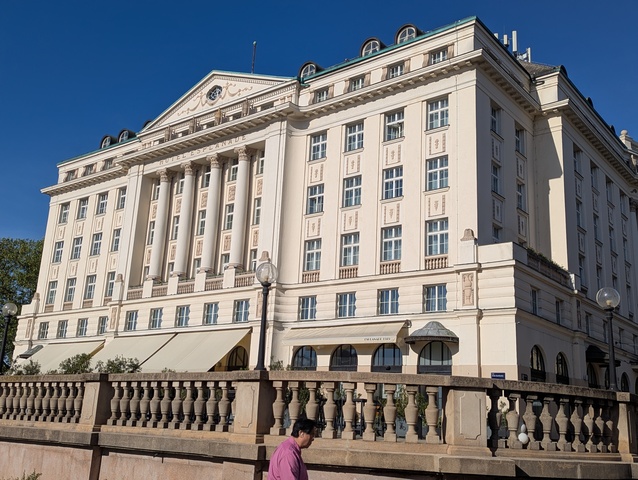
LSFMMBPF took place this year in the Esplanade Hotel (a quite remarkable historic landmark in Zagreb, and conveniently located in the center). Most of the technical discussions happened in the different rooms hosting the tracks during the day, but other parts that makes the event so great (and similarly to other conferences, this time) are the social events in the evening: this was a great opportunity to meet and chat with people, and put faces to the names and email addresses we interact with all year long !
The eBPF track
As the name suggests, LSFMMBPF hosts multiple tracks, each one dedicated to a specific topic. For my part, I was invited to participate in the eBPF track, which gathered not only kernel developers, but also compiler maintainers, external tools contributors and major eBPF users. Here is an extract of the topics covered during those three days:
- BPF support in GCC
- BPF verifier improvements
- BPF architecture support (x86, ARM64, RISC-V…)
- New BPF features: coroutines, arguments on stack, arenas, programs signature, better BTF data…
- Tooling for the kernel developers and maintainers: development toolkits, CI, reviews from LLMs…
- Use case examples and further needs
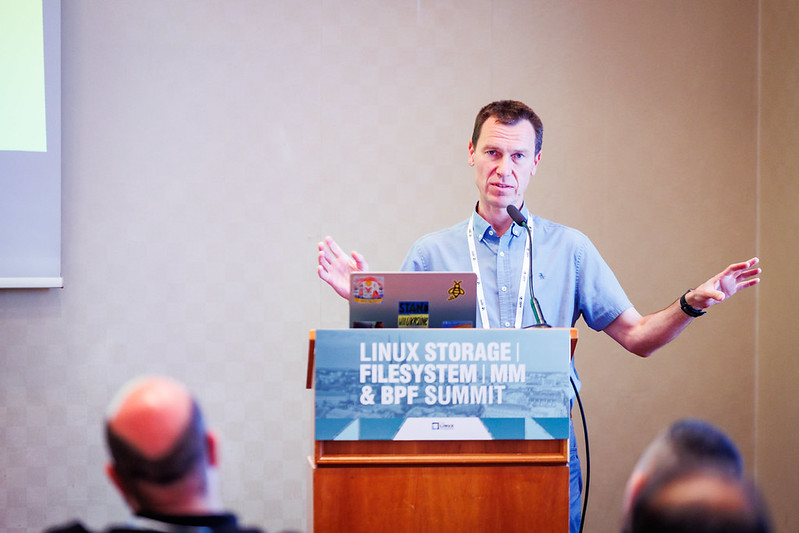
All of these topics were introduced by people actively contributing to those aspects, and having people from different “sides” of those topics led to some really interesting discussions, allowing to quickly raise the issues in the discussed architectures and implementation, and reach agreements on how move forward. This also allowed everyone to dive straight into the discussions, as the audience was already comfortable with the technical foundations of the topics brought to the table.
The KASAN for eBPF project
As part of the partnership between Bootlin, the eBPF foundation and the Alpha-Omega foundation, I have been working in recent months on the addition of KASAN memory checker support for eBPF programs. This feature is not really designed for eBPF end users: it is rather an additional tool for kernel developers, aiming to help them detect bugs earlier in the eBPF-related code in the kernel, such as in the eBPF verifier. As this kind of work involves a close collaboration with other developers and maintainers in the community, it has already gone through several steps:
- At the beginning of 2026, a RFC detailing the feature scope has been posted on the BPF mailing list to define the needed elements to start working on an actual implementation
- A few weeks before LSFMMBPF, a Proof Of Concept of KASAN instrumentation inserted in eBPF programs was sent to the mailing list. Despite being incomplete, it allowed to showcase some KASAN reports being emitted from programs,
- Finally, I attended LSFMMBPF in May to introduce the current state of this work: how does KASAN work in a nutshell, what’s exactly the feature and its scope, how the current Proof Of Concept behaves, and what are the missing pieces to make it actually integrated into the kernel. This was the opportunity to receive some feedback about it and make sure that it goes in the right direction: this feedback was pretty positive and validated that it looks like what eBPF developers and maintainers are expecting.
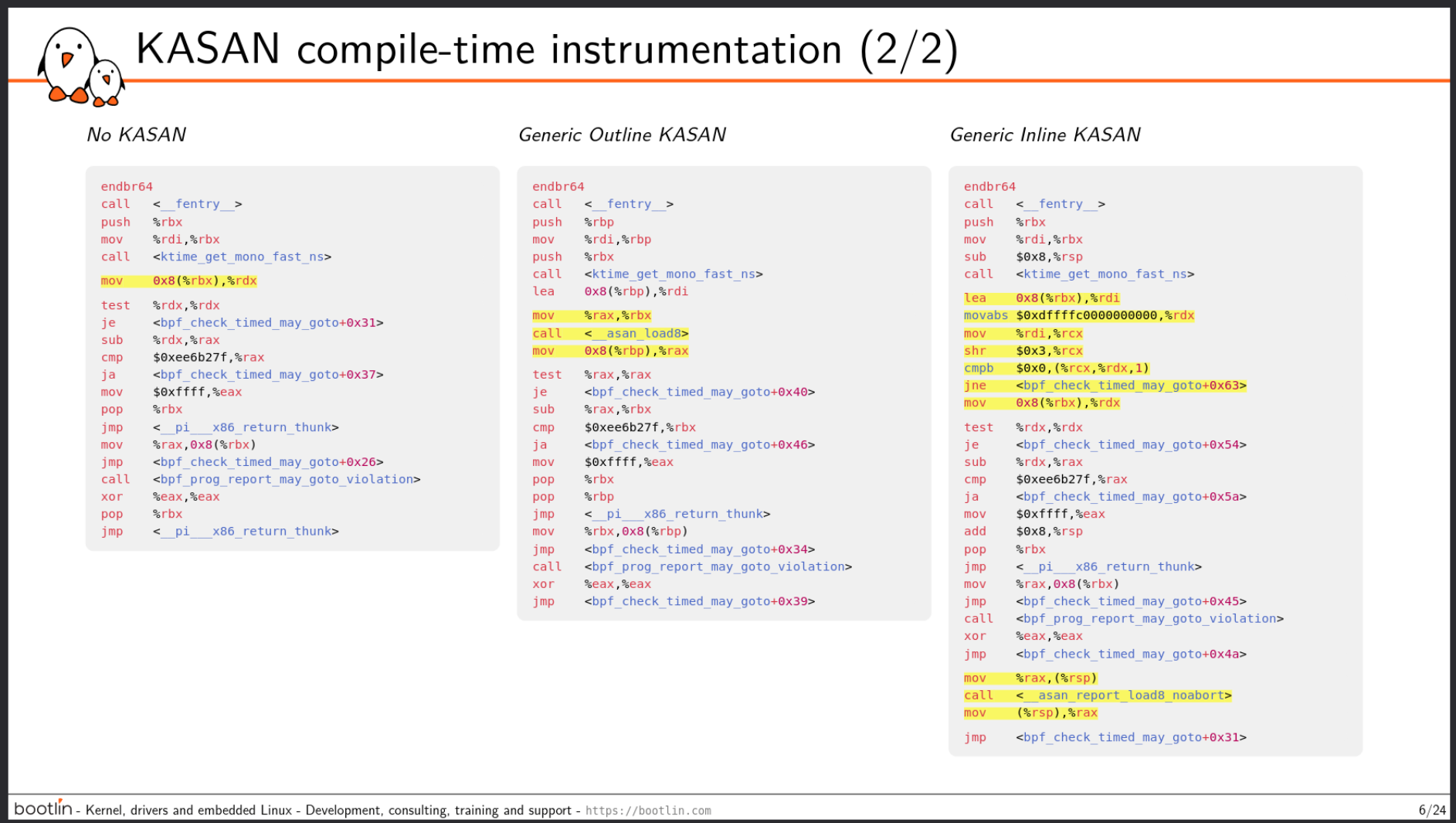
This talk also allowed to make small adjustments to the initial implementation plan:
- What exact BPF instructions should be covered by this new instrumentation ?
- Is the effort worth it for some very specific instructions ?
- How should this feature be enabled/disabled ?
- Where to put the thresholds about performance and optimization in this instrumentation ?
- What are the issues or cases that need special care ?
For those interested in the feature and the current work state, here are the slides used to introduce the topic:
The KASAN addition for eBPF program is still a work in progress, but the discussions on both the mailing lists and during LSFMMBPF are definitely helping to keep a good pace on it and get closer to its integration in the kernel !
